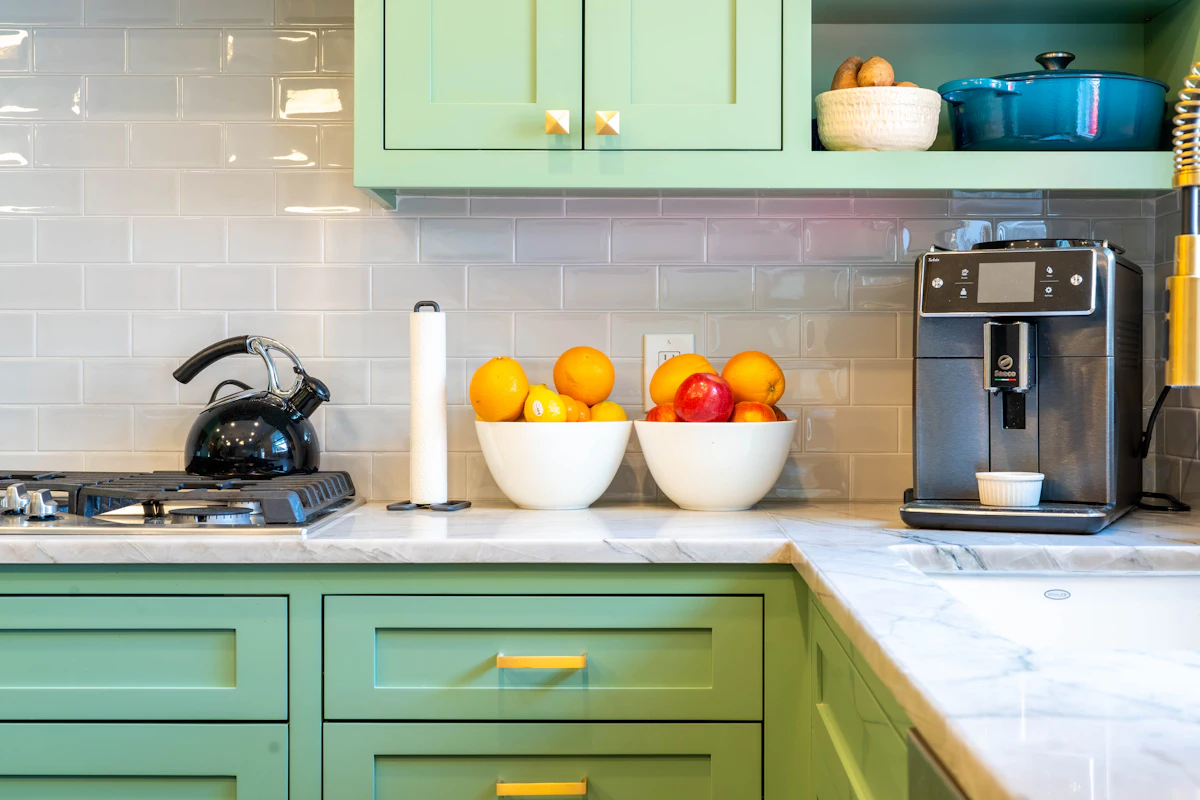
Painted cabinets get touched, bumped and wiped more than almost any other surface in a home. A finish that holds up comes from careful preparation and the right coatings, and most of that work is invisible once it's done. Here's what a thorough job usually includes.
1. Protecting the room
Countertops, floors, appliances and walls are covered and masked. If anything is sprayed inside the home, the area is sealed off with plastic so overspray stays put.
2. Taking it apart and labeling everything
Doors, drawer fronts and hardware come off. Each piece is labeled so it goes back exactly where it came from, with hinges adjusted the way they were. Many pros take doors and drawers to a shop to spray them in a controlled space while the cabinet boxes are done on site.
3. Cleaning and degreasing
Kitchen cabinets carry years of cooking grease, especially near the stove, and paint won't stick to it. Every surface is cleaned with a degreaser and rinsed. This step is easy to skip and is one of the most common reasons a cabinet finish peels.
4. Sanding and repairs
Surfaces are scuffed so primer can grip. Dents, gouges and old hardware holes are filled if you're changing hardware. On open-grain woods like oak, a grain filler can be used if you want a smooth, furniture-like look instead of visible texture.
5. Priming
A bonding primer made for slick, previously finished surfaces goes on next. On woods that bleed tannins, or over stains, a stain-blocking primer keeps discoloration from coming through. Primer is sanded smooth before the color coats.
6. The finish coats
The topcoat should be a hard, durable coating rated for cabinets, not ordinary wall paint. It's applied in thin, even coats, usually sprayed for the smoothest result, with light sanding between coats where the product calls for it. Ask which product a pro uses and why.
7. Cure time and reassembly
Paint can feel dry within hours but takes much longer to reach full hardness. Doors go back on and hardware is reinstalled once they can be handled, and the finish keeps curing for days to weeks after that, depending on the product. Your pro should tell you how gentle to be in the meantime.
What to ask
- Do you remove doors and drawers? Where are they sprayed?
- How do you clean and degrease before priming?
- Which primer and topcoat do you use, and why?
- Is grain filling included if I want a smooth look?
- Are the cabinet interiors or the back of the doors included?
- How long until I can use the kitchen normally?
- What's covered if the finish fails, and is that in writing?
For more on comparing pros, see how to choose a cabinet painter.