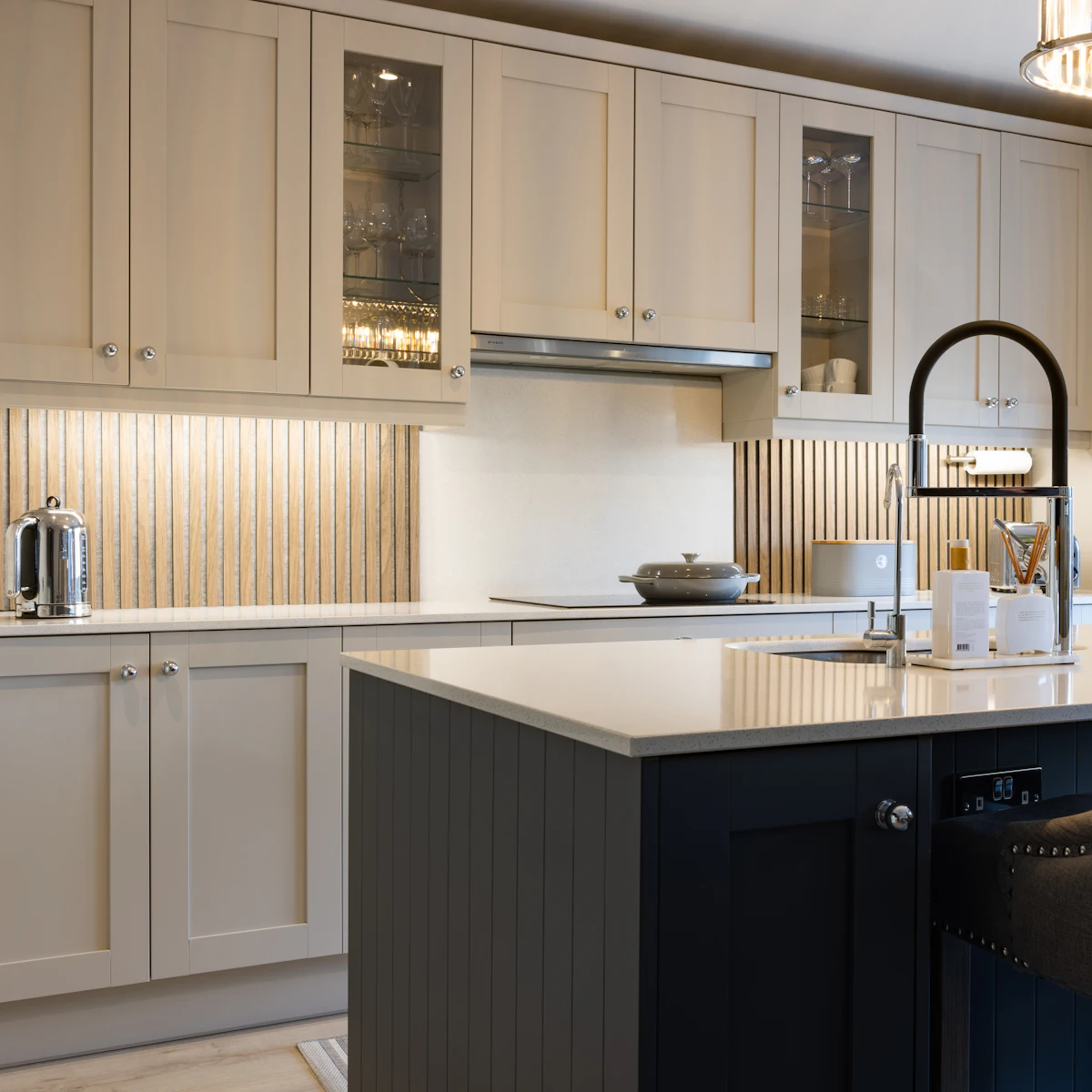
Cabinet painting is priced mostly by labor, and most of that labor is preparation. That's why "how much for my kitchen?" is hard to answer without seeing it. These are the things that make the biggest difference.
How many doors, drawers and panels
The count of pieces matters more than the size of the kitchen. Each door has two faces and four edges to prep and coat; each drawer front adds more. A kitchen with lots of small doors can cost more than a bigger one with fewer, larger doors.
Door style
Flat slab and simple shaker doors are quicker to sand and spray than raised panels, beadboard or doors with lots of detail and inside corners.
Condition and repairs
Heavy grease, peeling old finishes, water damage, loose joints and gouges all add prep time. Changing hardware means filling the old holes and drilling new ones.
The look you want
- Smooth over open grain: filling oak grain for a smooth finish adds a full step.
- Big color changes: going from dark to white may need extra primer or color coats.
- Two-tone or glazed: more colors and decorative techniques mean more time.
What's included
Door fronts only, or backs too? Cabinet boxes and face frames? Interiors? Crown molding, toe kicks, end panels, the island? These can change an estimate a lot, so make sure every estimate covers the same items.
Where the work happens
Spraying doors in a shop gives a controlled environment and keeps your kitchen usable longer, but includes transport. Spraying on site needs more masking and containment. Neither is wrong; ask how each pro does it.
Comparing estimates
The best way to compare is to ask every pro the same questions and get the scope in writing. Our list of questions to ask a cabinet painter is a good place to start.